The afternoon at the Plaza had gone wrong, the way a thing goes wrong when men decide a woman is something to be won. Tom's voice filled the suite like heat off a sidewalk, certain and cruel, and I watched Gatsby's beautiful confidence crack at the edges for the first time all summer.
"She never loved you," Gatsby said, but the sentence trembled.
Daisy stood between them, her gloved hands pressed to her throat, and I thought she would dissolve into the wallpaper. Tom pushed and pushed, dredging up bond salesmen and drugstores, and I saw Daisy's eyes go to the window, to the green smear of the park, to some far place none of us could follow.
Then she did the thing I never expected.
She laughed. Not the breathless laugh she gave at parties, the one that promised everything and meant nothing. This was small and certain, almost frightened of itself.
"Tom," she said, "you've told me what I feel for an hour. You've never once asked."
Tom blinked. "Daisy, for God's sake."
"I'm going," she said. She turned to Gatsby, and her face was wet but her voice was not. "I loved you when I was young, and I let them tell me it was impossible, and I have spent five years being comfortable instead of being happy. I won't do it the rest of my life."
Gatsby reached for her as a drowning man reaches for the idea of land. "Daisy."
"Don't make it a speech, Jay," she whispered. "Just take me away before I'm sensible again."
Tom started forward, and I think for a moment he meant to be violent, but Gatsby stepped in front of her, and there was something in his stance, the old discipline beneath the pink suit, that made Tom stop. The two of them stood breathing at each other in the dying light.
"You'll be back," Tom said finally. "This kind of thing, it doesn't last. You belong with your own kind."
"I've never once known what my own kind was," Daisy said. "That was always the trouble."
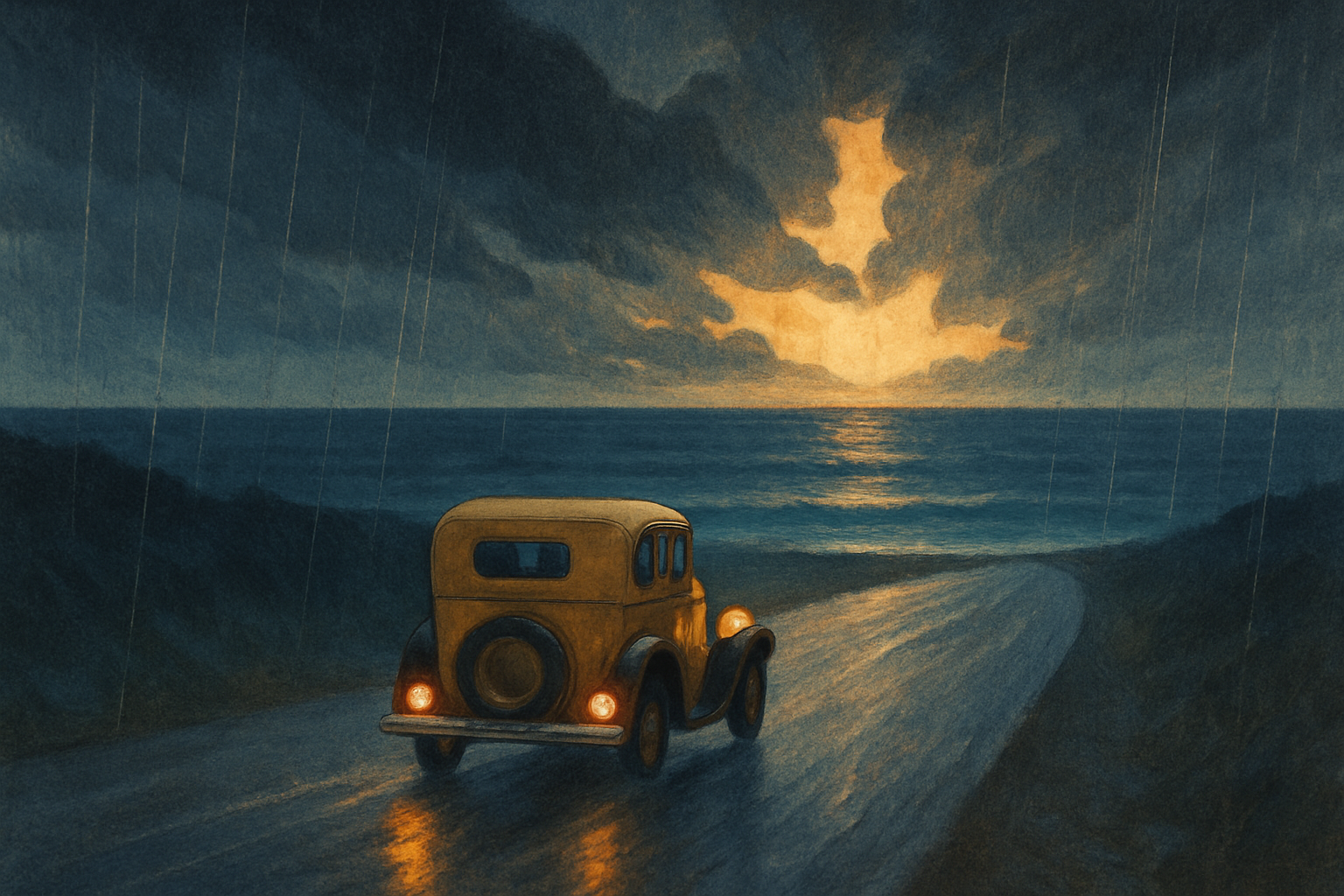
We went down in the elevator in silence, Daisy and Gatsby and I, while Tom and Jordan stayed behind. On the street the heat was breaking at last, a gray bank of cloud rolling in off the Sound, and the first fat drops of rain struck the pavement like coins.
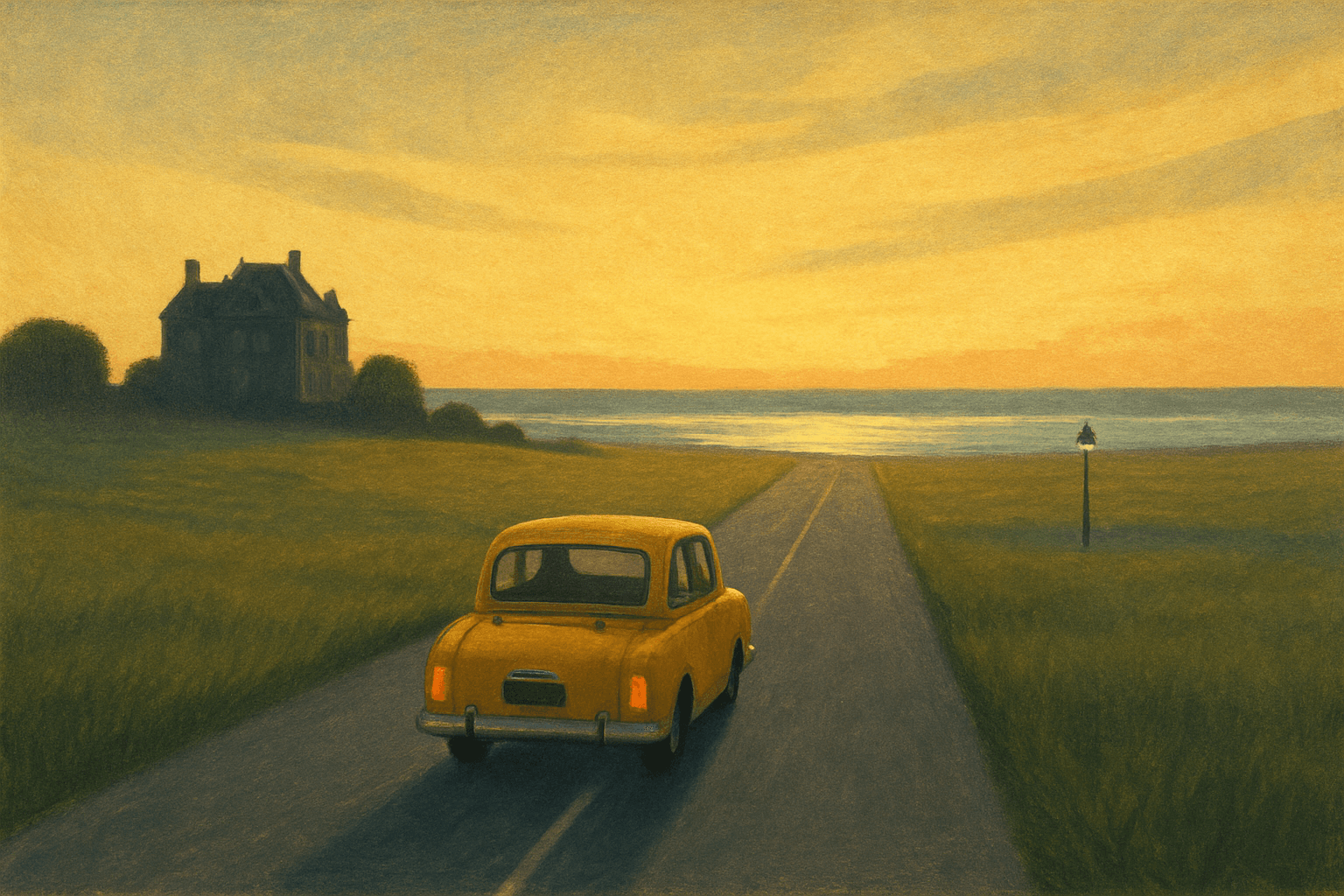
Gatsby's yellow car waited at the curb. He helped Daisy in with a tenderness that hurt to watch, as if she were made of the same stuff as his dreams and might evaporate. Then he turned to me.
"Old sport," he said, and could not finish.
"Don't drive through the valley of ashes," I said suddenly. I don't know what made me say it. A premonition, maybe, the ghost of a thing that almost happened. "Take the long way. Promise me."
He looked at me strangely, then smiled, the smile that understood you completely and believed the best of you. "The long way," he agreed. "We've got nothing but time now."
They drove off into the rain, slow and careful, away from the ash heaps and the brooding eyes on the faded billboard, away from a woman in a garage I would never learn the name of, away from a small angry man with a revolver in his coat. The yellow car turned north, toward the city and the trains and the wide unmapped country beyond, and I stood on the wet sidewalk a long time after the taillights were gone.
I did not see them again for almost a year.
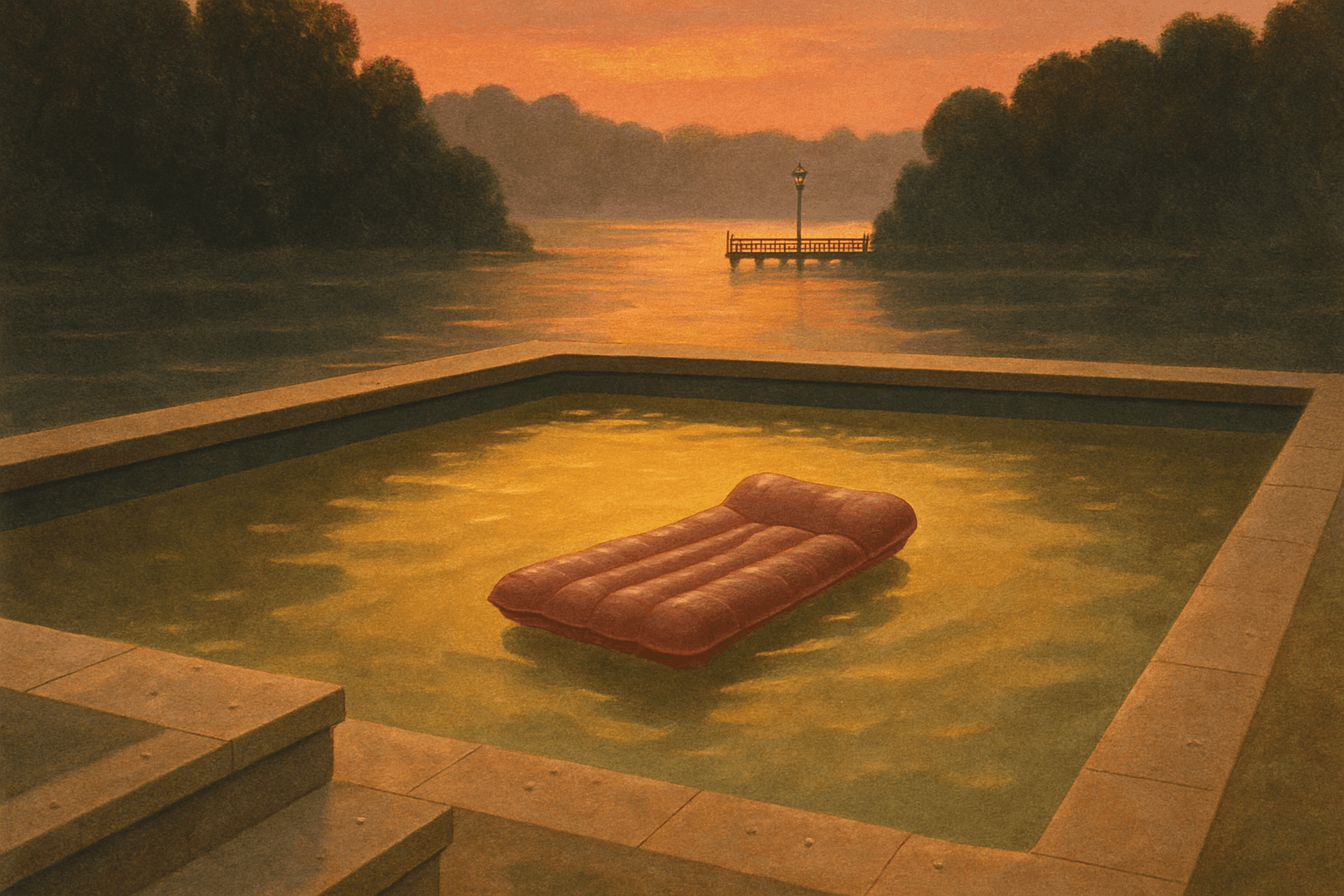
The summer collapsed without them. Tom and Daisy's house went up for sale, and Tom drifted west to wherever men like Tom go to be among their own kind. Gatsby's mansion sat dark, the pool drained, the lawns going to seed, and the people who had drunk his champagne forgot his name with astonishing speed. The orchestra did not return. The cars did not come. I would walk past the place on summer evenings and find it silent, and I would think of how he had stood on his lawn with his arms out toward a green light across the water, wanting a thing so badly he had built an entire world to deserve it.
The difference was that this time he had gotten it, and had been wise enough to leave before the world could take it back.
A postcard came in October, from Montana, of all places. No return address. In Daisy's looping hand it said only: We are well. The sky here is enormous. J. sends his regards, old sport. I read it perhaps thirty times. I keep it still.
Then, the following June, a letter, thicker, from San Francisco. Gatsby's handwriting, careful and self-taught, the letters of a man who had practiced being a gentleman from a list in a book.
Dear Nick, he wrote. You will laugh, but I have gone into the shipping business, the honest kind, and I find I am rather good at it without needing to be anyone but myself. Daisy planted a garden. She is not always happy, I will not lie to you, there are days she misses the noise and the certainty of being adored by a hundred people at once. But she stays. She chooses it again every morning, and I have learned that this is worth more than any green light ever burning across a bay.
I think of you often. You were the only one of them who saw me and did not want anything from me. Come west, old sport. There is room.
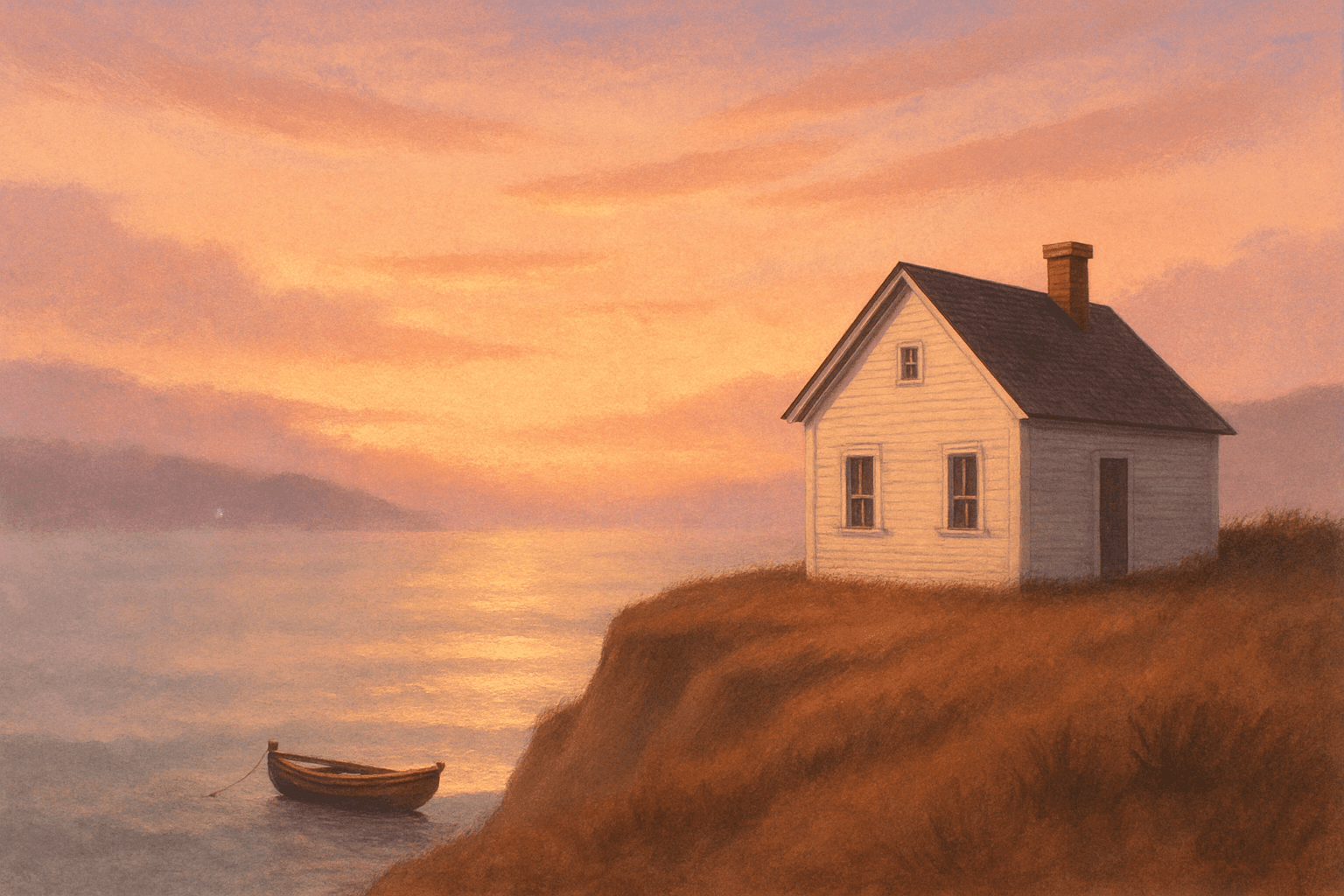
I did go west, though not for years, and not for him. But I went, in the end, the way everyone in those days seemed to drift westward looking for a fresh start the East had stopped offering. And I found them in a white house above the Pacific, older, quieter, real in a way they had never been able to be in West Egg.
Daisy met me at the door with flour on her hands and a child on her hip, the little girl grown now into a solemn watchful thing with her mother's eyes, and a smaller one besides. The voice was the same, full of money still, but warmer now, lived in. "Nick," she said, and her face did something complicated, joy and shame and gratitude all at once. "You came."
Gatsby came up from the water below, sleeves rolled, sun on his face, and when he saw me he laughed out loud and crossed the lawn at a run like a boy. He was not the man in the pink suit anymore. He was better, and smaller, and free.
We sat on the porch that evening and watched the sun go down into the ocean, the largest light there is, and no man on earth could mistake it for a thing he might someday possess. Daisy hummed in the kitchen. The children fought sweetly over something in the grass.
"Do you ever miss it?" I asked him. "The parties. The reaching."
Gatsby was quiet a while. "I spent five years rowing against the current, old sport," he said at last, "sure that if I just pulled hard enough I'd come back to a morning that was already gone." He looked at his wife through the lighted window. "Turns out you only have to let go of the dock. The current takes you somewhere new. I never knew that. Nobody ever told me a man was allowed to arrive."
The light failed slowly over the water, and for once nobody was waiting for it to come back.